
Side By Side
Farming has never been easier with Honda's selection of multi-purpose utility vehicles. Honda side by sides are proven on NZ farms, providing customers with flexibility. The range starts with the compact Pioneer 520, offers 700cc class options and the class leading Pioneer 1000 range. With models offering capacity for 2-6 people, the Honda range has a Side by Side for everyone. Upgrade your farm with a Honda Pioneer today.
Want to learn more about the Pioneer range? Visit the Pioneer Hub.

Pioneer 520
The Pioneer 520’s powerful 518cc engine with fuel injection is great for cold weather and high altitude performance. The strut-assist tilt utility bed makes dumping cargo a breeze.
The narrow width lets you and a passenger go where other Side by Sides can’t, on width-restricted trails and farm tracks. It also allows easy transport and storage.
The Pioneer 520 is your go-to Side by Side that punches well above its size and weight on the farm.
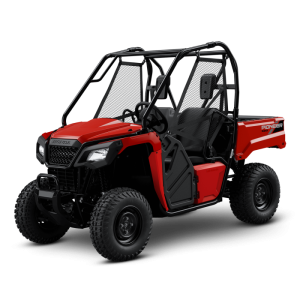
Pioneer 700
Work or fun, the Pioneer 700 can get it all done. Full of Honda technology and features like the 675cc liquid-cooled engine with fuel injection for easy startups and flawless operation at higher altitudes.
We've made big improvements in the cab including added storage (almost twice the storage of the previous model), new tilt steering wheel for easy access, and larger cup holders. An updated dash switch panel and an LCD screen that's twice the size of the previous makes viewing important info easy.
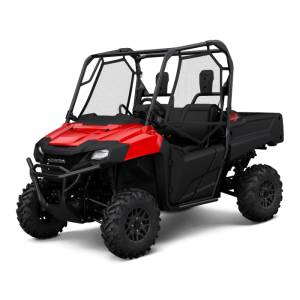
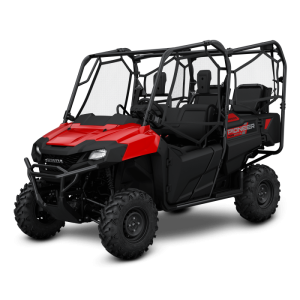
Pioneer 1000-3P
The Pioneer 1000-3 Person range is the essential farm powerhouse. The powerful 999cc twin engine, delivers strong performance in the mid and top range. While lower gear ratios to deliver strong acceleration, versatility, and performance. The towing capacity is a massive 1,134kg (with 454kg hauling).
The Pioneer 1000-3P performs in the toughest terrain thanks to smart design and quality components. Impressive ground clearance and large tyres. Fully-independent front and rear suspension with some of the longest travel of any multi-purpose Side by Side. And open or locked front and rear differentials that prevent you from unnecessarily tearing up delicate surfaces.
Find the perfect fit for your farm with four trim levels; Pioneer 1000, Deluxe, Forest and Trail edition.
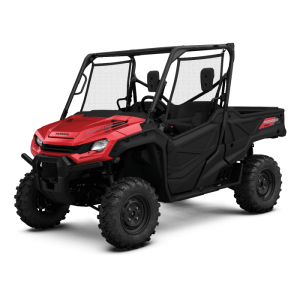 Pioneer 1000-3P
Displacement: 999 cc
Seating Capacity: 3
Towing Capacity: 1134 kg
RRP Incl. GST $36,794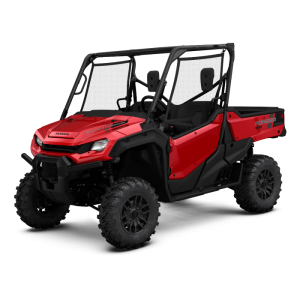 Pioneer 1000-3P Deluxe
Displacement: 999 cc
Seating Capacity: 3
Towing Capacity: 1134 kg
Deluxe Features: Black alloy wheels, under-dash storage shelf, accessory switch panel, 12-Volt power socket in the bed
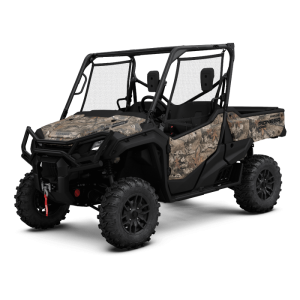 Pioneer 1000-3P Forest
Displacement: 999 cc
Seating Capacity: 3
Towing Capacity: 1134 kg
Forest Features: i-4WD, Warn winch, rear bed light & interior light, black alloy wheels, oversized front bumper and Camo graphics
RRP Incl. GST $39,957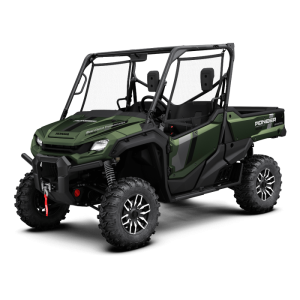 Pioneer 1000-3P Trail
Displacement: 999 cc
Seating Capacity: 3
Towing Capacity: 1134 kg
Trail Features: i-4WD, Warn winch, mirror, interior light, black alloy wheels, Fox QS-3 Quick Adjust system
RRP Incl. GST $40,532
Pioneer 1000-5P
The Pioneer 1000-5 Person range gives you all the benefits of the Pioneer 1000-3P and adds flexible seating options. That's trusted performance, a smooth DCT transmission with solid gears, great ground clearance, 1,134kg towing and much, much more.
Our Pioneer 1000-5 Person models include Honda QuickFlip® seating in the rear tray. Letting you instantly switch from a fold-flat bed configuration to comfortable passenger seating for one or two.
Find the perfect fit for your farm with four trim levels: Pioneer 1000, Deluxe, Forest and Trail edition.
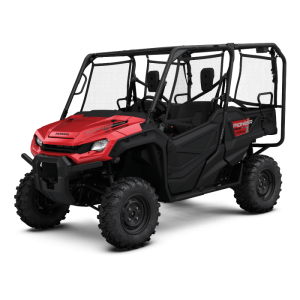 Pioneer 1000-5P
Displacement: 999 cc
Seating Capacity: 5
Towing Capacity: 1134 kg
RRP Incl. GST $39,094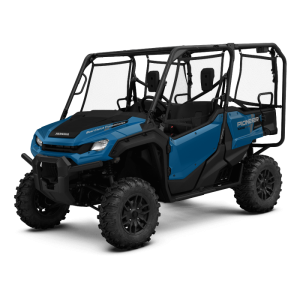 Pioneer 1000-5P Deluxe
Displacement: 999 cc
Seating Capacity: 5
Towing Capacity: 1134 kg
Deluxe Features: Black alloy wheels, under-dash storage shelf, accessory switch panel, 12-Volt power socket in the bed
RRP Incl. GST $40,819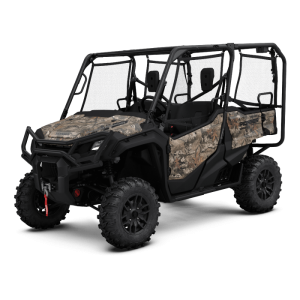 Pioneer 1000-5P Forest
Displacement: 999 cc
Seating Capacity: 5
Towing Capacity: 1134 kg
Forest Features: i-4WD, Warn winch, rear bed light & interior light, black alloy wheels, oversized front bumper and Camo graphics
From $43,407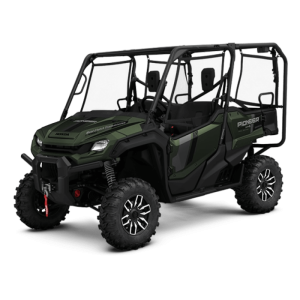 Pioneer 1000-5P Trail
Displacement: 999 cc
Seating Capacity: 5
Towing Capacity: 1134 kg
Trail Features: i-4WD, Warn winch, mirror, interior light, black alloy wheels, Fox QS-3 Quick Adjust system
RRP Incl. GST $43,982
Pioneer 1000-6P
It’s the Side by Side built for the biggest jobs, with room for six passengers along with a full-size tilt bed. Plus with over 1100 kilos of towing capacity, plenty of under seat storage, and much more.
The Pioneer 1000-6 Deluxe Crew is loaded with plenty of other features. Automatic Dual-Clutch Transmission (DCT) with an i-4WD system offering 2WD, 4WD and Differential Lock. A high/low sub-transmission, self-levelling rear suspension, plus a pre-wiring package that makes it easy to add accessories like a winch.
And of course, nobody can match Honda's reputation for reliability and build quality. So go ahead – bring the whole crew, and all their gear. It’s easy with a Honda Pioneer 1000-6 Deluxe Crew.
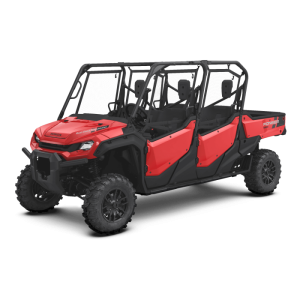 PIONEER 1000-6 Deluxe Crew
Displacement: 999 cc
Seating Capacity: 6
Towing Capacity: 1134 kg
RRP Incl. GST $45,994
Talon
Our Talon lineup redefines sport Side by Side performance. Powered by our 999cc Unicam® engine and featuring an automatic Dual-Clutch Transmission, they excel in wide-open, high-performance environments, while the FOX Live Valve variant adds advanced adaptive suspension.

Frequently Asked Questions
A side by side (SxS) is a small farm utility vehicle, while a quad is a four wheel motorbike.
Key differences:
- Seating and controls
- Side by side: Automotive style seat with a backrest, seatbelt, steering wheel, pedals and one or more passenger seats.
- Quad (ATV): Straddle seat, handlebars, body weight used to balance the bike.
- Safety
- Side by side: Designed with an Occupant Protection Structure (ROPS-style frame), seatbelts and doors / side nets to help keep you inside in a rollover. Honda Pioneers come with hard doors, nets and 3-point belts with an emergency locking retractor on all models.
- Quad: No cab or belts, so rider technique and training are critical.
- Stability and footprint
- Side by side: Wider track and longer wheelbase for planted feel, especially with loads.
- Quad: Narrower and lighter, which can be handy in tight spots but less forgiving if overloaded or ridden incorrectly on slopes.
- Carrying and towing
- Side by side: Built around a rear tray and higher tow ratings. For example, the Honda Pioneer range tows from around 450 kg on a compact 520 up to over 1,100 kg on Pioneer 1000 models.
- Quad: Good for smaller trailers and spray units, but generally has a lower towing capacity. (Honda ATVs range from 385kg - 600kg towing capacity). Often includes carry racks.
- Ease of getting on and off
- Side by side: Low step in, no swinging a leg over the seat, but doors and seat belts to open / close and put on / off. Easier for those with limted mobility / range of motion.
- Quad: Quicker to swing on and off, but more physically demanding, especially over a long day.
For farmers looking to step up towing, carrying and protection, a Pioneer side by side is often the next move from an ATV.
Side by sides can offer safety advantages on hills when they are used correctly, but they are not invincible. Terrain, speed, load and driver behaviour still matter.
Where a side by side can help:
- Wider and longer footprint
- A Pioneer’s wider track and longer wheelbase give a more planted feel on hills when compared with many quads, especially with a load in the tray.
- Built-in protection
- ROPS-type occupant structure, doors and side nets and 3-point belts are there to help keep you inside the vehicle if the worst happens.
- Controlled power delivery
- Gear and DCT transmissions on Honda Pioneers give strong engine braking and a more predictable drive than other side by sides with drive belts. This helps when descending or climbing in low gear.
Important limitations on hills:
- No side by side is safe on every slope. Very steep, broken or slippery faces may still be unsuitable.
- High loads, spray tanks or feed bags carried high or to one side can undo the stability advantage of a side by side.
- Beltless gear and DCT drivetrains help with engine braking, but you still need to use the correct gear, speed and line.
Good practice is to always wear your seat belt, keep loads low and central, avoid sudden turns on side slopes and follow the slope guidance in the owner’s manual. Training and local dealer advice remain key.
Capacity is one of the main reasons farmers move to a side by side. The numbers vary by model, but modern utility SxS machines are built around towing and tray work.
Typical examples from the Honda Pioneer range:
Pioneer 520
Towing: Rated to tow 450 kg.
Tray: Compact tip tray for tools, spray units or small feed loads.
Pioneer 700 (2 and 4 seat)
Towing: 680 kg capacity, enough for larger spray units, trailers and fertiliser spreaders.
Pioneer 1000 (3, 5 and 6 seat)
Towing: Up to 1,134 kg, with about 450 kg in the tray depending on model. That moves the Pioneer 1000 into "small tractor jobs" territory.
Real-world farm considerations:
Braking on slopes
- Stick within the rated tow weight and use low gear. Gear-based or DCT transmissions on Pioneers give engine braking to help control weight on hills.
Wet paddocks and clay
- Even if the vehicle will pull the load, wheel slip and rutting can be the limiting factor. Weight spread (tyres, pressures) and 4WD/diff lock are important.
Load placement
- Keep weight low and forward in the tray and balance trailers correctly on the drawbar to avoid snaking or light steering.
If you have a specific spray unit, fert spreader, dog box or trailer, your local Honda dealer can check the numbers against the exact Pioneer model and your terrain.
Reliability comes from a mix of design, build quality, servicing and how the machine is used.
What farmers typically look for:
Proven on real New Zealand farms
Machines that have already done the hard yards on dairy platforms, drystock hill country and mixed operations. The Honda Pioneer range is proven on NZ farms and suited to local conditions.
Transmission and driveline
Many SxS models on the market use rubber drive belts that can wear or slip if overworked.
Honda Pioneers use gear-based transmissions, including beltless Dual Clutch Transmission (DCT) on 1000 models and steel-gear automatics on the Pioneer 520, which are designed for long life and strong engine braking.
Service support and parts
A strong dealer network, readily available genuine parts and technicians who understand farm use are a big part of long-term reliability. Honda’s NZ-wide dealer network and dedicated farm focus are a key strength here.
Simple, farm-friendly design
Easy access for servicing, durable suspension and frames designed to handle ruts, rocks and races day after day. Honda’s Pioneer's are "built to last" with functionality across the range.
The Pioneer side by sides combine long-proven Honda farm engineering with strong local dealer back-up, which is what reliability really looks like in NZ conditions.
These features are about matching traction to the job and protecting your paddocks.
What each feature does:
- 2WD
- Rear wheels drive only. Lighter steering, less drivetrain stress and often kinder on pasture in good conditions.
- 4WD
- Front and rear axles drive. Better traction in mud, on clay or steep country, especially when towing or carrying heavy loads.
- Differential lock (diff-lock)
- Locks left and right wheels together on an axle so both turn at the same speed. Helps in slippery or rutted ground where one wheel might spin.
- Many Pioneer 1000 models offer selectable diff lock, often combined with intelligent 4WD systems for smart traction.
- Turf mode
- Unlocks or relaxes the rear differential so the rear wheels can turn at different speeds. That makes tight turns easier and helps reduce scuffing and damage on pasture, lanes and around sheds. Turf mode is available across the Pioneer 1000 range.
What most NZ farmers actually need:
- Hill country or heavy clay
- 4WD and diff lock are highly recommended, especially if you tow regularly or work in winter conditions.
- Dairy platforms and lighter, flatter country
- 4WD is still very useful, but turf mode (where available) can be valuable to protect races and paddocks when turning with a load.
- Mixed terrain
- Being able to move between 2WD, 4WD, diff lock and turf mode from the seat lets you set the Pioneer up for each job and paddock.
4WD and diff lock are highly recommended for farm work. While turf mode quickly pays off if you need to protect your pasture or tight shed areas.
Side by sides are designed for farming. Regular maintenance will help your side by side to run longer with less downtime from repairs.
Core maintenance:
- Regular servicing
- Follow the service schedule in the owner’s manual (hours and/or time based) and work with your local Honda dealer.
- Farm use with lots of towing, mud or steep country can justify shorter intervals.
- Engine oil and filters
- Fresh oil and genuine filters are essential with the hard stop-start work typical on NZ farms.
- Air filters in dust
- Air filters can clog surprisingly quickly on dust, races and in summer dry spells.
- The Pioneer 1000’s intake is positioned up high under the bonnet to help draw in cleaner air, reducing maintenance requirements. However, filters still need regular inspection and cleaning or replacement.
- Driveline and brakes
- Check CV boots, driveshafts and brake pads more often if you are regularly towing heavy loads, are working on steep hills or muddy conditions for prolonged periods.
- The triple disc brake setups like those on the Pioneer 700 are designed for strong stopping power. When using in muddy, dusty and wet conditions, it’s important that these are maintained in line with factory recommendations.
Belt vs gear drive:
- Belt-drive SxS machines can need more attention to belt condition and clutching, especially if overloaded or used as a tractor substitute.
- Honda Pioneers use gear-based transmissions (no rubber drive belt) to provide long-term durability and engine braking, which reduces one of the biggest wear items on many other side by sides.
When it comes to servicing. A little time in the shed saves a lot of downtime in the paddock.
The "best" mustering side by side depends on your country and how you run stock, but there are clear features to prioritise.
What matters for mustering:
Visibility
Clear view forward and to the sides to spot stock in long grass or broken gullies. Open cabs or units with good glass and mirrors are important. Pioneers are designed with high seating and good sight lines.
Size and agility
On tight hill tracks or in bush edges, a compact machine like the Pioneer 520, with its narrow width, can get into places larger SxS units cannot.
On more open dairy and drystock country, a 700 or 1000 with longer wheelbase, additional carrying capacity and extra comfort for up to 6 passengers can be a better choice for long days.
Suspension comfort
Independent suspension and well tuned shocks matter when you are in the seat all day. Pioneer models feature long-travel dual A-arm suspension for comfort and control.
There is no single hour or year number, because farm conditions vary so widely, but there are clear patterns.
What influences lifespan:
Workload
A machine doing two light runs a day on a flat dairy platform has a very different life to one pulling heavy loads on steep hill country all day.
Maintenance and repairs
Sticking to service intervals, fixing small issues quickly and using genuine parts all extend life.
Honda’s focus on durable frames, suspension and proven engines, combined with a NZ-wide dealer network, is aimed at keeping Pioneers working for years, not seasons.
Driving style
Smooth driving, appropriate speeds and respecting load and tow ratings pay off in longer life for CV joints, suspension, frames and trays.
On well maintained dairy and mixed farms, a Honda Pioneer that is serviced on time, not overloaded and driven sensibly can remain a frontline machine for many seasons before major work is required.
On harsher hill country or where machines are used as mini-tractors every day, components will wear faster, so budgeting for earlier suspension and driveline refreshes is sensible.
Honda Pioneers are designed and tested for long-term farm use in New Zealand, but the actual lifespan on any given property will come down to how the machine is used and looked after.
Enclosed cabs have become more popular as farmers look for comfort and protection, especially in southern and central regions.
Cold and wet conditions:
Protection from wind and rain dramatically reduces fatigue and makes early starts or night checks much more manageable.
Heaters and demisters (where fitted) help keep the screen clear and the cab warm. Many Pioneer 1000 models are designed to integrate accessories like heaters, windscreens and wipers.
Fogging and condensation:
Any fully enclosed cab can fog if you jump in wearing wet gear. Opening side windows or vents and using heater/demist options is the best cure.
Good quality seals and ventilation design help reduce fogging; accessory choices (glass vs poly windows) can also make a difference.
Dust:
No cab is 100 percent dust-proof in a dry Nor’wester or behind a feeder, but good sealing, quality doors and correct window positioning reduce dust significantly compared with an open unit.
A Pioneer with an enclosed cab can turn "weather dependent" jobs into all-weather work, provided you plan for normal cab behaviour with dust and fogging.
Diesel side by sides:
- Pros: Strong low-down torque, good for heavy towing, fuel often already stored on farm.
- Cons: Heavier machines, more engine noise and vibration, more complex emissions gear in modern diesels.
Petrol side by sides:
- Pros: Quicker to warm up, responsive power, typically lighter vehicles and easier cold starting.
- Cons: Slightly higher fuel consumption than comparable diesels in some applications.
Electric side by sides:
- Pros: Very quiet, no fumes in sheds, instant torque.
- Cons: Range limits, charging infrastructure, battery degradation over time, especially on remote hill country blocks.
How Honda fits on NZ farms:
- The Pioneer range uses proven petrol engines, tuned for strong low and mid-range torque rather than outright speed.
- Fuel injection and longitudinal engine layout are designed to give reliable cold starts, consistent performance at altitude and efficient power delivery to the wheels, which farmers will notice when towing and climbing.
For most New Zealand farms, a petrol Honda Pioneer offers a good balance of torque, simplicity, and proven reliability, without the complexity of a modern diesel or the range and durability questions of a full electric.